Screen-Free Zones Create Better Sleepers and Learners
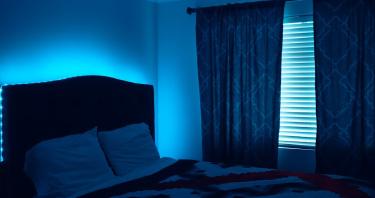
My daughter used to drag her tablet to bed every night. “Just five more minutes,” she’d say, her face glowing blue in the darkness. Sound familiar?
Then we tried something radical. We banned screens from bedrooms entirely. Not just at night-all the time. The tablet charges in the kitchen. Phones stay in a basket by the front door after dinner. Her room became what I call a “digital sanctuary.
The first week was rough - lots of complaining. But by week three? She was falling asleep faster, waking up easier, and-this surprised me most-her grades actually improved.
Turns out, we weren’t crazy - science backs this up.
What Blue Light Actually Does to Kids’ Brains
Here’s the deal. Screens emit blue light, which isn’t inherently evil. Sunlight contains blue light too - the problem is timing.
When blue light hits your child’s eyes after sunset, their brain gets confused. It thinks it’s still daytime. This suppresses melatonin production-the hormone that makes us sleepy.
Studies show that children are even more sensitive to this than adults. A 2018 study from the University of Colorado Boulder found that just one hour of bright screen light before bed cut melatonin production in preschoolers by 88%. Not a typo - eighty-eight percent.
Their little bodies haven’t developed the same protective mechanisms we have. Their pupils are larger - more light gets in.
And melatonin disruption doesn’t just affect sleep. It messes with:
- Memory consolidation (when learning actually sticks)
- Mood regulation
- Immune function
- Growth hormone release
So that tablet in bed is more than delaying sleep. It’s actively interfering with your child’s development.
The Sleep-Learning Connection Nobody Talks About
You’ve probably heard that kids need 9-11 hours of sleep. But quantity isn’t everything.
Sleep quality matters enormously for learning. During deep sleep, the brain replays the day’s experiences, strengthening neural connections. New vocabulary words - math concepts. Social skills. All of it gets processed while kids sleep.
When screens interrupt this process, children might spend 10 hours in bed but only get 6 hours of quality sleep. They wake up tired - they struggle to focus. Teachers notice - parents notice.
One study from a sleep lab in Boston tracked 2,000 children over three years. Kids with screens in their bedrooms scored lower on cognitive tests-even when total sleep time was the same. The difference wasn’t how long they slept. It was how well.
Think about that. Same amount of sleep, worse outcomes. The screen-free bedroom variable made that much difference.
Creating Your Digital Lockdown (Without Starting a War)
Okay, so you’re convinced. Screens need to leave the bedroom. But how do you actually make this happen without constant battles?
I won’t pretend it’s easy - kids push back. Teenagers especially. But here’s what worked for us and dozens of families I’ve talked to.
**Start with why. ** Kids respond better when they understand the reasoning. Show them a simple video about blue light and sleep. Let them see the science. My daughter actually got interested in tracking her own sleep quality after we explained what was happening in her brain.
**Create a charging station - ** This is key. Every device has a “home” where it sleeps at night. Ours is a power strip in the kitchen. Devices go there at 8 PM. No exceptions-including mine. Kids notice when rules apply to everyone.
**Replace the screen ritual. ** If your child winds down with videos, you can’t just remove that and offer nothing. Audiobooks work great. So do podcasts designed for kids. Physical books (remember those - ) make a comeback. Some families do puzzles or drawing.
**Make bedrooms better. ** When you remove screens, add something good. Fairy lights - a cozy reading nook. Better pillows. Make the bedroom a place kids actually want to be, sans electronics.
**Handle the pushback calmly. ** You’ll hear “but everyone else gets to! " and “this is so unfair! " Acknowledge their feelings - stay firm anyway. The drama peaks around day 4-5, then fades.
What About Homework?
Fair question. Lots of homework happens on devices now.
Our rule: homework happens in common areas. The dining room table - the living room couch. Anywhere but the bedroom. This keeps bedrooms associated with sleep, not work or play.
For older kids who genuinely need computers for homework, set a hard cutoff time. Homework wraps up by 8 PM, and devices leave the room. If they’re not done, they finish it in the morning or face the natural consequence at school.
Harsh - maybe. But protecting their sleep protects everything else.
The Results You Can Actually Expect
Let me be realistic here. Going screen-free in bedrooms won’t transform your child overnight. You won’t suddenly have a straight-A student who bounds out of bed singing.
But here’s what most families report after 3-4 weeks:
- Faster time to fall asleep (20-40 minutes quicker on average)
- Fewer middle-of-the-night wake-ups
- Easier mornings with less grogginess
- Better attention during homework time
- Improved mood, especially in the evening hours
Some families see dramatic changes - others see modest improvements. It depends on how much screens were disrupting sleep before. If your kid was already a good sleeper, the change might be subtle. If they were lying awake for hours, expect bigger shifts.
One Year Later
We’re now twelve months into our screen-free bedroom experiment. My daughter doesn’t even ask anymore. It’s just how things work.
Her sleep schedule stabilized around 9 PM to 6:30 AM. She reads actual paper books before bed-something she’d never done before. Her teacher mentioned improved focus during morning lessons.
And honestly - she seems happier. Less wired - more present.
Did removing screens from her bedroom cause all of this? I can’t prove it scientifically. Too many variables in a kid’s life. But the timing lines up - the research supports it. And my gut says yes.
The bedroom is for sleeping. That simple idea, applied consistently, changed things for our family.
Maybe it could change things for yours too.