Why Your Toddler's First Peer Group Is Their Siblings
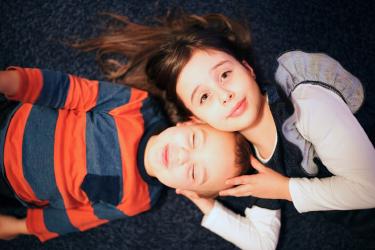
Have you ever noticed how your toddler copies everything their older sibling does? The way they walk, talk, even the weird faces they make at dinner? That’s not random. Your little one is essentially enrolled in Sibling University, and classes are in session 24/7.
Most parents assume peer socialization starts at preschool or daycare. But but-if you have more than one kid, your toddler’s first and most influential peer group is already living under your roof. Those sibling relationships shape social skills in ways that playground friendships simply can’t replicate.
Siblings Teach What Parents Can’t
You can model sharing. You can talk about taking turns until you’re blue in the face. But nothing drives home these lessons quite like having a 5-year-old snatch a toy from your toddler’s hands.
Harsh - maybe. Effective - absolutely.
Siblings create what researchers call “horizontal relationships”-connections between people of roughly equal status. Parent-child dynamics are vertical - you’re the authority figure. Your rules get followed (eventually, theoretically). But with siblings, toddlers learn to negotiate with someone who doesn’t have to listen to them.
This changes everything.
When your 2-year-old wants the red crayon and their older sibling already has it, they can’t just cry until you fix it. Well, they can. But they quickly discover that crying at a sibling produces different results than crying at mom or dad. Sometimes the sibling shares - sometimes they walk away. Sometimes there’s a standoff over that stupid red crayon that lasts twenty minutes.
Each scenario teaches something valuable about human interaction.
The Rough-and-Tumble Advantage
Physical play between siblings looks chaotic. It kind of is. But researchers studying early socialization have found that this roughhousing actually builds emotional regulation skills.
Think about it. Your toddler and their sibling are wrestling on the living room floor. Someone gets a little too aggressive. The other one cries or yells. The play stops. Then-assuming nobody’s actually hurt-they calibrate and try again. Softer this time.
This constant adjustment teaches toddlers to read social cues. They learn where the line is by accidentally crossing it. Repeatedly.
A study from the University of Cambridge found. Children with siblings scored higher on theory of mind tasks-basically, their ability to understand that other people have different thoughts and feelings. The researchers attributed this to the sheer volume of social interactions siblings have compared to only children.
And we’re talking thousands of interactions per week. No playdate schedule can compete with that.
Conflict Is Actually the Point
I know. Nobody wants to hear their kids fighting again. The whining, the tattling, the dramatic “they looked at me! " accusations-it’s exhausting.
But here’s what’s really happening during sibling conflict: your toddler is getting a crash course in conflict resolution. They’re learning that disagreements don’t end relationships. They’re figuring out when to stand their ground and when to compromise. They’re experiencing the full range of human emotions in a relatively safe environment.
The key word is “relatively - " Siblings can be brutal. They know exactly which buttons to push. But they also know each other in ways that outside peers never will. There’s a security in sibling relationships that allows for messier interactions.
Your toddler can have a complete meltdown with their sibling and still share a room with them that night. Try doing that with a kid from the playground.
Birth Order Matters (But Not How You Think)
Older siblings don’t just teach younger ones-they learn from them too. Having a toddler sibling forces older kids to adapt their communication, simplify their play, and practice patience.
Meanwhile, younger siblings get constant exposure to more advanced social behavior. They’re watching, absorbing, imitating. Research on sibling influence shows that toddlers with older siblings often develop language skills faster because they’re hearing more complex conversations.
But don’t assume the older child is always teaching and the younger is always learning. Toddlers bring their own chaos to the dynamic. They push boundaries - they demand attention. They force their older siblings to share space, time, and parental focus.
Both kids are getting schooled.
What About Only Children?
Look, I’m not saying kids without siblings are doomed to social awkwardness. That’s obviously not true. Only children develop peer skills through daycare, cousins, playdates, and eventually school.
But they do miss out on this particular form of socialization-the constant, inescapable, living-together kind. The type where you can’t just go home when things get hard because you’re already home.
If you have an only child, you can approximate some of this through regular time with close cousins or family friends. Consistent exposure matters more than variety. Your child benefits more from seeing the same kids weekly than from occasional playdates with different children.
How Parents Can Support Sibling Peer Learning
Your job isn’t to prevent all sibling conflict. (Good luck with that anyway. ) Your role is to create conditions where productive conflict can happen.
A few strategies that actually work:
**Step back when you can. ** Not every squabble needs a referee. If nobody’s getting hurt and the volume is manageable, let them work it out. You can observe from nearby without intervening.
**Coach rather than solve. ** When you do step in, ask questions instead of declaring solutions. “What could you both do so everyone gets a turn? " puts the problem-solving on them.
**Protect the younger child’s agency. ** It’s tempting to always make the older sibling share or give in. But toddlers need practice advocating for themselves too. Let them try to resolve things before you rescue them.
**Create cooperative opportunities. ** Some of the best sibling bonding happens when kids work toward a shared goal. Building a blanket fort together. Making a mess in the kitchen. Conspiring against you, probably.
**Name what you see. ** “You shared your snack with your brother. He looks really happy about that. " This simple narration helps toddlers connect their actions to social outcomes.
The Long Game
Sibling relationships in early childhood predict social competence later in life. Kids who learn to navigate sibling dynamics tend to have stronger friendships, better romantic relationships, and more effective workplace collaborations as adults.
That’s a lot of pressure to put on your 3-year-old fighting over who gets the blue cup.
But that’s exactly the point. These tiny, annoying, repetitive conflicts are building blocks. Every negotiation over screen time, every argument about who touched whom, every tearful reconciliation-it’s all practice for being a person who can get along with other people.
Your toddler won’t remember most of it. But their social brain is recording everything.
So the next time your kids are bickering over something ridiculous, take a breath. You’re not witnessing a failure of your parenting. You’re watching peer development happen in real time.
Messy - yes. Loud - definitely. Important - more than you probably realized.