Why Board Games Beat Apps for Building Executive Function
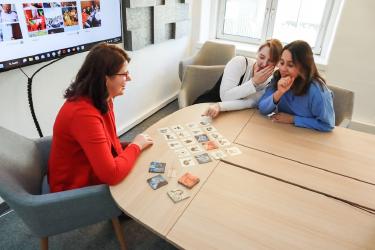
Your kid’s favorite tablet app might keep them quiet during dinner prep, but here’s something those flashy digital games probably aren’t doing: building the mental muscles they’ll need to plan, focus, and make thoughtful decisions for the rest of their life.
I’m talking about executive function-that cluster of cognitive skills that helps us manage time, pay attention, switch gears, and control impulses. And while there’s absolutely a place for educational apps, there’s growing evidence that good old-fashioned board games do something special for developing brains.
What’s Executive Function, Anyway?
Think of executive function as your brain’s air traffic control system. It manages three big things:
Working memory - holding information in your head while you use it. Like remembering whose turn comes after yours while also planning your next move.
Cognitive flexibility - adapting when things change. Your strategy was working great until your brother blocked your path. Now what?
Inhibitory control - stopping yourself from doing the first thing that pops into your head. Not grabbing an extra card when nobody’s looking. Waiting your actual turn.
Kids aren’t born with these skills fully formed. They develop gradually from toddlerhood through the mid-twenties (yes, really). And but-they develop through practice.
Why Apps Fall Short
I’m not here to trash screen time entirely. Some apps are genuinely well-designed. But most share a few features that limit their executive function benefits.
**Instant feedback loops. ** Tap something, get immediate response. This trains quick reactions, not deliberate thinking. Real life doesn’t work this way. Neither does homework, or job interviews, or deciding whether to text your ex at 2 AM.
**Auto-correction. ** Many apps gently guide kids toward the right answer. Make a wrong move - the game subtly redirects you. Sounds helpful, but it removes the natural consequences that teach planning and foresight.
**Solitary play. ** Even “multiplayer” apps often just mean taking turns against strangers you’ll never meet. There’s no reading faces, no negotiating, no managing the social complexity of beating your best friend without making them cry.
**Designed for engagement, not struggle. ** App developers need kids to keep playing. That means smoothing out frustration, which is exactly where executive function growth happens.
A 2019 study from the American Academy of Pediatrics found that kids who spent more time on interactive apps showed no improvement in executive function compared to those who didn’t. Some showed slight decreases.
What Makes Board Games Different
Pull out Candy Land and you’re not exactly running a cognitive boot camp. But even simple games offer something screens struggle to replicate.
**The waiting. ** In a four-player game of Uno, you spend 75% of your time not playing. That’s 75% practicing impulse control, maintaining attention, and keeping your strategy in working memory while watching others take their turns.
**The social friction. ** Someone always wants to quit. Someone always thinks the rules should be different. Someone knocks over the board reaching for chips. Managing these moments-negotiating, compromising, controlling frustration-that’s executive function in action.
**The real consequences. ** Make a bad move in Checkers and you lose a piece. Nobody saves you. Nobody hints that maybe you should reconsider. You just lose the piece and have to deal with it. This kind of natural feedback teaches planning in ways gentle app corrections can’t.
**The physicality. ** Moving actual pieces, shuffling real cards, watching the board state change before your eyes-this engages working memory differently than watching pixels shift. You’re building spatial mental models while managing the physical reality of the game.
The Research Backs This Up
A 2023 study published in the journal Developmental Psychology followed 200 kids over three years. Those who played board games at least twice weekly showed significantly stronger executive function gains than matched peers who spent equivalent time on educational apps.
The difference was most pronounced in cognitive flexibility. Board game kids became better at switching strategies when their first approach wasn’t working. App. focused kids tended to stick with whatever method the game had trained them on.
Another study from the University of Cambridge found. Chess instruction improved planning abilities in children more than computer-based logic training-even when the computer training was specifically designed to target planning skills. The researchers theorized that the social accountability of playing against a real opponent created pressure that strengthened cognitive control.
Picking the Right Games
Not all board games are created equal here. Candy Land - mostly luck. Not much executive function challenge. But it’s fine for preschoolers learning turn-taking basics.
For real cognitive workout, look for games that require:
Planning ahead - Chess, Checkers, Blokus, Connect Four. You need to think several moves into the future.
Strategy adjustment - Ticket to Ride, Catan, Carcassonne. What works early might not work late. You have to adapt.
Resource management - Monopoly (the real rules, not the house rules version), Splendor, Azul. Balancing multiple goals simultaneously taxes working memory.
Hidden information - Clue, Codenames, Battleship. Tracking what you know, what others might know, and what remains unknown.
For younger kids, try:
- Zingo (ages 4+) - bingo-style matching that requires attention and quick recognition
- Outfoxed (ages 5+) - cooperative mystery solving that builds deductive reasoning
- Robot Turtles (ages 4+) - programming concepts without screens
For older kids and teens:
- Pandemic - cooperative planning under pressure
- Wingspan - complex resource management with beautiful birds
- Azul - pattern recognition and spatial planning
Making It Actually Happen
Knowing board games are good isn’t the same as playing them. Here’s what works in practice.
**Start small. ** Ten minutes of a simple game beats zero minutes of an ambitious one. Don’t pull out Risk on a Tuesday night.
**Schedule it. ** “We should play more games” means nothing. “Sunday afternoon is game time” means something. Block it like you’d block soccer practice.
**Let them lose - ** This is hard. But rescuing kids from losing teaches them nothing about managing disappointment or adjusting strategies. Lose gracefully yourself sometimes too.
**Quit while it’s fun. ** End the game when energy is still positive, even if nobody’s won yet. Especially with younger kids. You want them asking to play again, not dreading family game night.
**Rotate who picks - ** Give everyone ownership. Yeah, you’ll play Guess Who for the 47th time. That’s okay.
The Bigger Picture
Look, this isn’t about demonizing technology or pretending we can go back to 1985. Screens are part of life. Your kids will use them constantly as adults.
But the cognitive skills that help humans thrive-planning, adapting, controlling impulses, managing frustration-these develop through a specific kind of struggle. The kind where you have to wait, where nobody saves you from mistakes, where you’re accountable to other humans in real time.
Board games offer that struggle in a low-stakes package. They’re practice rounds for the harder games of life.
Plus, honestly? Watching your eight-year-old finally understand why you’ve been sacrificing pawns to control the center of the board-that’s more satisfying than any notification badge.
Grab a game this weekend - see what happens.