Cultural Parenting Raises the Most Inclusive Generation Yet
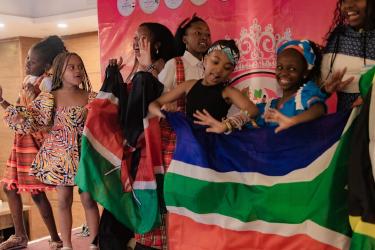
Something pretty amazing is happening in homes across the world right now. Parents are raising kids who don’t just tolerate differences-they genuinely embrace them. And it’s not by accident.
This shift toward cultural parenting is creating what researchers are calling the most inclusive generation we’ve ever seen. But what does that actually look like in practice? And how can you bring this approach into your own family?
What Cultural Parenting Actually Means
Forget the old “colorblind” approach our parents’ generation championed. You know the one: “I don’t see color, I just see people. " While well-intentioned, that method missed something key. It ignored the rich mix of experiences that shape who we are.
Cultural parenting flips that script. It’s about actively teaching kids to recognize, appreciate, and celebrate differences-whether that’s race, religion, language, ability, or family structure. Think of it less as ignoring differences and more as understanding them.
Dr. Beverly Daniel Tatum, a psychologist who’s spent decades studying identity development, puts it this way: kids notice differences from a remarkably young age. By three or four, they’re already categorizing people. The question isn’t whether they’ll notice-they will. The question is what meaning they’ll attach to what they see.
That’s where you come in.
Why This Generation Is Different
Here’s what’s changed. Today’s kids are growing up in a world that’s more connected than any generation before them. Their classmates come from everywhere - their YouTube recommendations span continents. Their favorite musicians might be Korean, Nigerian, or Colombian.
But exposure alone doesn’t create understanding. Plenty of previous generations had diverse classrooms without developing true cultural awareness.
The difference? Parents are getting intentional about it.
A 2023 study from the Pew Research Center found that 68% of millennial parents actively seek out books, media, and experiences that expose their children to different cultures. Compare that to just 31% of boomer parents who reported doing the same when their kids were young.
That’s a massive shift in just one generation.
Families are traveling differently too-choosing destinations for cultural immersion rather than just resort relaxation. They’re learning languages together, cooking international cuisines, and having conversations about current events that previous generations avoided entirely.
Practical Ways to Raise Culturally Aware Kids
So how do you actually do this? Here are some approaches that work, based on what educators and child psychologists recommend:
**Start with your bookshelf. ** Look at the picture books and chapter books in your home. Do the characters reflect a range of backgrounds? Are stories told from perspectives different from your own family’s? If your collection is pretty homogeneous, that’s an easy fix. Libraries are free, and diverse children’s literature has exploded in the past decade.
**Watch what you watch together. ** Streaming services have made international content incredibly accessible. “Bluey” from Australia, “Molang” from France, anime from Japan, Bollywood films-these are more than entertainment. They’re windows into how other families live, love, and solve problems.
**Talk about what you see. ** When you’re out in the world and notice someone wearing traditional clothing from another culture, don’t pretend you didn’t see it. Don’t shush your kid’s questions. Use those moments as teaching opportunities. “That’s a beautiful hijab. Some Muslim women choose to cover their hair as part of their faith.
**Celebrate holidays that aren’t yours. ** This doesn’t mean appropriating or going overboard. But acknowledging Diwali, Lunar New Year, or Eid-even in small ways-shows kids that important moments exist beyond your family’s calendar.
**Befriend different. ** Your kids learn from watching you. If all your close friends share your background, that sends a message. Diversifying your own social circle might be the most powerful thing you can do.
When Kids Ask Hard Questions
And they will ask hard questions. Count on it.
“Why does that man look different? " “Why can’t she walk? " “Why do those two dads have a baby?
Your instinct might be to shush them because you’re embarrassed. Don’t. That teaches kids that differences are shameful or shouldn’t be discussed.
Instead, answer simply and honestly. “People come in all different shapes, sizes, and colors. Isn’t that interesting? " Or: “Some families have two moms, some have two dads, some have one parent, some have grandparents raising them. Families come in lots of forms.
You don’t need a perfect script. What matters is that you’re willing to engage rather than shut down the conversation.
A friend of mine has a biracial daughter. She told me the most meaningful thing people can do is simply acknowledge her daughter’s heritage rather than trying to place her in a single box. “Mixed kids shouldn’t have to choose one identity,” she said. “They contain multitudes.
The Pushback (Because There’s Always Pushback)
Not everyone’s on board with this approach. Some critics argue that emphasizing differences creates division. Others worry about “woke” parenting or indoctrination.
Look, I get the concern. Nobody wants their kid to feel guilty about their own heritage or to see every interaction through a lens of identity politics.
But there’s a middle ground between ignoring differences entirely and making every moment a sociology lesson. Cultural parenting isn’t about shame - it’s about curiosity. It’s not about hierarchy - it’s about appreciation.
The goal isn’t raising kids who constantly apologize for who they are. It’s raising kids who can walk into any room and find common ground with whoever’s there.
That’s not division - that’s exactly the opposite.
What the Research Shows
Studies consistently show that kids raised with cultural awareness develop stronger critical thinking skills. They’re better at perspective-taking-the ability to imagine how someone else might experience a situation. They show more empathy in controlled experiments.
They’re also more adaptable. In a global economy where your kid might end up working with colleagues in Singapore, reporting to a boss in Brazil, or managing a team spread across four time zones, cultural fluency is more than nice to have. It’s a genuine competitive advantage.
A 2022 study published in Child Development found that children exposed to multicultural education showed 23% higher scores on creative problem-solving tests. The researchers theorized that exposure to different ways of thinking expands the mental frameworks kids can draw from.
It Starts at Home
but - schools can help. Diverse media helps - travel helps.
But the foundation gets laid at home. In everyday conversations. In how you talk about the new family that moved in down the street. In whether you correct Grandpa when he makes that comment at Thanksgiving.
Kids are always watching - always learning. And what you model matters infinitely more than what you explicitly teach.
So take a look at your own assumptions. Your own friend groups. Your own reaction when someone different walks by. That’s where cultural parenting begins.
The most inclusive generation isn’t happening by accident. It’s being deliberately raised by parents who decided that building bridges matters more than building walls.
And honestly? That gives me hope for where we’re headed.