Forest School Movement Transforms Urban Child Education
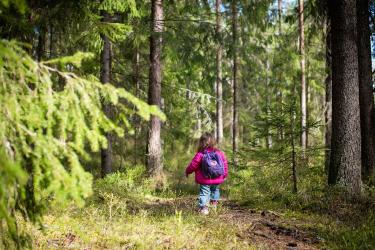
Something interesting is happening at preschools across major cities. Kids are climbing trees, building mud kitchens, and identifying bird calls-all during regular school hours. The forest school movement, which started in Scandinavia decades ago, has finally hit urban America. And it’s changing how we think about early childhood education.
My neighbor pulled her four-year-old from a traditional preschool last spring. “He was miserable sitting at tables doing worksheets,” she told me. Now he attends a nature-based program three days a week. The transformation - pretty remarkable. But is this just another parenting trend, or does the science actually back it up?
What Exactly Is a Forest School?
Forest schools are more than outdoor recess with a fancy name. They’re structured educational programs where children spend most of their time outside, regardless of weather. Rain boots and mud pants are standard uniform.
The approach originated in Denmark during the 1950s when a mother started taking neighborhood children into the woods daily. The idea spread throughout Scandinavia before reaching the UK in the 1990s. Now it’s landed in places you wouldn’t expect-Brooklyn, downtown Seattle, even Phoenix.
Here’s the deal: forest school philosophy centers on child-led learning. Kids choose their activities. Want to spend an hour examining beetles? Go for it - prefer building a stick fort? That works too. Teachers act as facilitators rather than instructors, stepping in to extend learning or ensure safety, but mostly observing.
The environment itself becomes the curriculum. Seasons change, weather varies, and children adapt. A fallen log transforms into a balance beam one day and a pretend spaceship the next.
The Brain Science Behind Nature-Based Learning
Your kid’s brain on nature looks different than their brain on screens. Research from the University of Michigan found that walking in nature for just 20 minutes improves attention and working memory. For children whose prefrontal cortexes are still developing, these benefits compound.
A 2019 study published in the International Journal of Environmental Research tracked 562 preschoolers over two years. Those in outdoor programs showed 27% better problem-solving skills compared to indoor-focused peers. They also demonstrated stronger social-emotional development.
Why does this happen - several factors are at play.
Unstructured outdoor time requires constant micro-decisions. Should I step on that slippery rock? Can I reach that branch? These small risk assessments build executive function-the same mental skills kids need for academic success later.
Nature also provides what researchers call “soft fascination. " Unlike video games or TV, which demand focused attention, natural environments gently engage our senses. this lets the brain’s attention system to rest and recover.
Then there’s the stress factor. Cortisol levels drop measurably when children spend time among trees. Lower stress means better learning - it’s not complicated.
Urban Forest Schools: Making It Work in Cities
You might be thinking: this sounds great for kids in Vermont, but what about city families?
Urban forest schools have gotten creative. Some partner with city parks departments. Others transform vacant lots into nature playgrounds. A program in Chicago uses a cemetery’s green spaces. (Sounds morbid, but it’s actually peaceful and surprisingly popular.
The Tinkergarten model brings nature-based learning to local parks through trained leaders who host small classes. They’ve expanded to over 3,000 locations nationwide since launching in 2016. Parents can find sessions happening in their neighborhoods without committing to full-time forest schooling.
Some traditional preschools are hybridizing their approach. They keep indoor classroom time but add substantial outdoor blocks-not 20 minutes of playground time, but two to three hours of exploration in natural settings.
Rachel, a kindergarten teacher in Denver, restructured her entire curriculum around outdoor learning last year. “I was skeptical at first,” she admitted. “But my students now meet or exceed all the same benchmarks while being measurably happier. Behavior problems dropped by about half.
What About Academic Readiness?
Parents worry - it’s what we do. And the biggest worry about forest schools tends to be: will my kid be ready for “real” school?
The evidence suggests yes-often more ready than traditionally educated peers.
Children in nature-based programs develop pre-literacy skills through storytelling around campfires, identifying letters in sticks and leaves, and dictating observations to teachers. Math happens through counting pinecones, measuring rainfall, and dividing snacks fairly among friends.
A longitudinal study from Germany followed forest kindergarten graduates into elementary school. By third grade, these kids outperformed peers in concentration, social behavior, and working independently. Academic skills showed no disadvantage.
The real question might not be whether forest school prepares children for traditional education. Maybe it’s whether traditional education prepares children for life.
Kids who’ve navigated disagreements over who gets the good digging spot, who’ve persisted through rain to complete a project, who’ve observed cause and effect in real-time with real consequences-these kids bring something different to the classroom.
Practical Considerations for Families
Thinking about forest school for your child? Here’s what to consider.
**Cost varies widely. ** Some nature-based programs charge premium prices. Others, particularly those run through parks departments or co-ops, match or undercut traditional preschool costs. In Seattle, one forest preschool charges $800 monthly; a parks department program costs $300.
**Weather readiness matters. ** You’ll need quality rain gear and layers. Plan to spend $150-300 outfitting your kid initially. Hand-me-downs work great once you know what’s needed.
**Location logistics can be tricky. ** If the program meets at a park 40 minutes from your house, that commute adds up. Look for programs in your neighborhood or near your workplace.
**Not every kid takes to it immediately. ** Some children, especially those accustomed to structured indoor settings, need adjustment time. Good programs expect this and support gradual transitions.
**Check credentials and ratios. ** Forest school philosophy doesn’t require certification, so quality varies. Ask about teacher training, adult-to-child ratios, and safety protocols.
The Bigger Picture
We’re in the middle of what some researchers call a “nature deficit disorder” epidemic. American kids spend an average of 4-7 minutes in unstructured outdoor play daily. Meanwhile, screen time clocks in at 4-6 hours.
The forest school movement represents a correction. Not a rejection of technology or academics, but a rebalancing.
There’s something almost radical about trusting children to learn through play, about believing that childhood itself has value beyond preparation for adulthood. Forest schools embody that trust.
And honestly? Watching a group of four-year-olds work together to move a heavy log teaches you something about human nature. Kids are more capable than we often assume. Given the right environment, they rise to meet challenges.
The mud-splattered, stick-wielding preschoolers at your local park might just be onto something. Their classrooms have no walls, their textbooks have roots and wings, and their education looks nothing like what most of us experienced.
But maybe that’s exactly the point.