The Hidden Benefits of Outdoor Play for Children
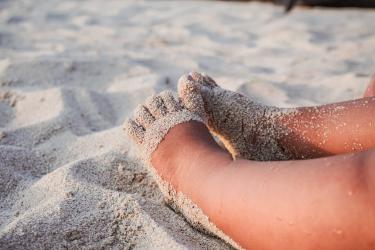
Remember when your biggest worry was whether you’d make it home before the streetlights came on? Those long summer afternoons climbing trees, building forts, and getting gloriously dirty weren’t just fun-they were secretly building the foundation for a healthy life.
Today’s kids spend an average of 4-7 hours daily staring at screens. Meanwhile, outdoor playtime has dropped by about 50% compared to just one generation ago. And honestly - it shows.
Why Dirt Under Fingernails Actually Matters
Here’s something that might surprise you: kids who play outside regularly get sick less often. Not despite the dirt-because of it.
Exposure to diverse microorganisms in soil, grass, and natural environments helps train the immune system. Studies from the University of Bristol found that a common soil bacterium called Mycobacterium vaccae actually triggers serotonin production in the brain. Translation? Playing in dirt can literally make your kid happier and healthier.
But the benefits go way beyond immunity. When children run, climb, jump, and balance on uneven terrain, they’re developing:
- Proprioception (body awareness in space)
- Vestibular processing (balance and spatial orientation)
- Gross motor coordination
- Fine motor skills from manipulating sticks, rocks, and leaves
These aren’t skills you can build on a tablet. Trust me, there’s no app for learning how to catch yourself when you trip over a root.
The Mental Health Connection You Can’t Ignore
Anxiety in children has skyrocketed. Between 2016 and 2020, anxiety diagnoses in kids aged 3-17 increased by 29%. That’s not a small uptick-it’s a crisis.
Nature exposure offers a surprisingly effective countermeasure. Research published in the International Journal of Environmental Health Research found that just 20 minutes in a park setting-even without exercise-significantly reduced cortisol levels in participants.
For kids, unstructured outdoor play does something screens can’t: it provides genuine challenge with real consequences. Climbing a tree involves actual risk assessment. Building a dam in a creek requires problem-solving without a reset button. These experiences build resilience because failure means something.
Think about it. When a video game gets hard, kids quit or switch games. When the stick bridge they’re building collapses, they rebuild. That’s a fundamentally different relationship with struggle.
Creativity Needs Room to Breathe
You’ve probably noticed that boredom has become almost extinct. Every waiting room, every car ride, every spare moment gets filled with entertainment. And we’re paying a price for that.
Outdoor play-especially the unstructured kind-forces creative thinking. A pile of sticks isn’t anything until imagination makes it a sword, a fishing pole, or part of an elaborate trap for imaginary creatures. This type of divergent thinking is exactly what schools and future employers claim to want, yet we systematically remove opportunities to develop it.
One study from the University of Kansas found that after three days of outdoor camping with no electronic devices, kids’ creativity scores jumped by 50%. That’s not a typo. Three days unplugged in nature essentially supercharged their creative thinking.
Physical Development That Actually Sticks
Organized sports are great. Little League, soccer practice, swim team-all valuable. But here’s what they’re missing: variability.
When kids play pickup games in backyards or parks, they negotiate rules, adapt to uneven numbers of players, and modify games on the fly. They might play on grass, concrete, or dirt. Hills become part of the game rather than obstacles to eliminate.
This variability builds what movement specialists call “physical literacy”-the ability to move confidently in diverse environments. Kids who only experience structured physical activity in controlled settings often struggle when environments change.
Plus, outdoor free play tends to be more intense without feeling like exercise. A kid who “hates running” will happily sprint for an hour during a game of tag. The motivation is intrinsic, which means the habit actually sticks.
Social Skills Get Sharpened Outside
Online communication follows different rules than face-to-face interaction. Emojis aren’t the same as reading facial expressions. Lag time in texting isn’t the same as real-time conversation navigation.
When kids play together outside, they’re constantly negotiating: whose turn is it, what are the rules, who gets to be the leader? These negotiations happen in real-time with real social consequences. You can’t just log off if things get uncomfortable.
This might sound stressful, and sometimes it is. But that’s precisely the point. Managing social stress in low-stakes play situations builds capacity for handling bigger social challenges later. Kids learn to read body language, tone of voice, and social dynamics through thousands of outdoor interactions.
How to Make Outdoor Play Happen (When Everyone’s Busy)
Look, I get it. Between school, homework, activities, and parents working, finding time for unstructured outdoor play feels impossible.
Lower your standards for “outdoor time. “ Your backyard counts. The parking lot while siblings are at practice counts. It doesn’t have to be a nature preserve.
**Weather isn’t actually a barrier. ** There’s a Scandinavian saying: “There’s no bad weather, only bad clothing. " Rain boots and puddle jumping build memories and immune systems alike.
**Start small. ** Fifteen minutes after school before screens come out. That’s it. Make it non-negotiable, and it becomes automatic.
**Connect it to something they already love. ** Bug-obsessed kid - nature becomes an insect safari. Artistic kid? Bring chalk or nature journaling supplies. Building kid? Sticks and rocks become construction materials.
**Find your village. ** Other parents are struggling with this too. Rotating outdoor playdates means kids have company and parents share the supervision load.
The Pushback You Might Be Feeling
Maybe you’re thinking: “My kid doesn’t like outside. " Fair enough. Screen entertainment is specifically designed to be more immediately engaging than anything nature offers. Of course there’s an adjustment period.
But most kids who “hate outside” haven’t had enough unstructured outdoor time to actually discover what they enjoy there. The first few sessions might be rough. They’ll complain about being bored. That’s actually the goal-boredom is the birthplace of creativity.
Or maybe safety concerns are holding you back. Stranger danger - traffic. Ticks. These worries are valid but often overblown. Statistically, kids today are safer than they were in the “free-range” 1970s. The difference is our awareness of risks, not the risks themselves.
Start in your own yard or a park where you can supervise from a distance. Gradually expand the boundaries as trust builds on both sides.
Making Peace With Imperfection
Perfect outdoor childhoods don’t exist. Your kids don’t need daily forest hikes or regular wilderness camping to benefit from outdoor play. They need regular, repeated exposure to fresh air, natural elements, and unstructured time.
Some days, ten minutes of backyard puttering is all that happens. That’s still ten minutes more than zero. Some days, they’ll spend three hours building an elaborate mud kitchen. Those are the days you’ll remember.
The goal isn’t Instagram-worthy outdoor adventures. It’s consistent, ordinary access to the outside world. A kid throwing rocks into a puddle is building the same neural pathways and immune responses as one on an organized nature expedition.
So open the door - kick them outside. Let them get dirty, take small risks, argue with friends, and discover their own entertainment. You’re not being lazy-you’re giving them exactly what decades of research says they need.
The streetlights will come on eventually. And they’ll come home changed in tiny, invisible ways that add up to something remarkable.