The VHS Revival: Why Families Choose Old Media Over Streaming
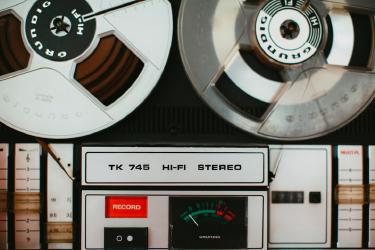
My neighbor Sarah pulled a dusty VHS player out of her garage last summer. Her kids-ages 8 and 11-had never seen one. Within a week, they were begging to watch “the rectangle movies” every Friday night.
Sarah’s not alone. Across the country, families are digging out old VCRs, hunting through thrift stores, and yes, even buying VHS tapes online. The prices are wild too. Some Disney tapes that cost $2 at garage sales five years ago now fetch $20 or more.
But why? We’ve got 4K streaming, endless content libraries, and algorithms that know exactly what we want to watch. So what’s pulling families back to a format that technically “died” in 2008?
The Finite Choice Factor
but about streaming: it offers too much.
Netflix alone has over 15,000 titles. Add Disney+, Hulu, Amazon, and whatever else you subscribe to, and you’re looking at a catalog that would take multiple lifetimes to watch. Sounds great in theory - in practice? It creates decision paralysis.
Research from Columbia University found that when people have too many options, they often make no choice at all-or feel less satisfied with whatever they pick. Parents see this play out constantly. Kids scroll through thumbnails for 30 minutes, argue about what to watch, then complain they’re bored with whatever gets chosen.
VHS eliminates this problem through sheer limitation. When you’ve got 15 tapes on a shelf, that’s your library. Pick one. The artificial scarcity forces a decision and, weirdly, makes the choice feel more special.
One dad in a parenting forum put it this way: “My kids treat our VHS collection like it’s a treasure chest. They actually get excited about movies they’ve seen twelve times.
Physical Media Creates Ritual
Remember the process of watching a movie before streaming? You had to get up, choose a tape, put it in the machine, maybe rewind it first. Fast-forwarding through previews. Adjusting tracking if the picture went fuzzy.
All of that friction - turns out it matters.
Streaming reduced movies to background noise. Click, play, half-watch while scrolling your phone. There’s no ceremony to it - vHS forces intentionality. You can’t casually throw on a tape-it requires actual effort.
Families who’ve adopted VHS movie nights report something interesting: everyone pays more attention. The kids don’t ask for tablets during the movie. Parents put their phones away. The ritual of physical media creates a shared experience that streaming somehow doesn’t.
“We do Pizza Friday with a VHS tape,” one mom explained. “The rule is no phones, no pausing except for bathroom breaks. My teenagers actually sit with us now instead of disappearing to their rooms.
The Accidental Screen Time Solution
Parents today are drowning in screen time debates. How much is too much? What counts as “good” screen time versus “bad”? Should you track minutes - use parental controls?
VHS sidesteps most of these headaches.
A VHS tape is roughly 90-120 minutes. When it ends, it ends. There’s no autoplay queuing up the next episode. No “Are you still watching - " prompt that assumes yes. No algorithm designed by people with psychology degrees specifically to keep your kids watching.
The format itself builds in natural stopping points. Movie’s over - tape needs rewinding. That physical break gives families an obvious moment to say “okay, that’s enough for tonight” without it feeling like punishment.
Compare that to streaming, where ending a show requires actively choosing to stop an experience designed to never stop. It’s the difference between a meal that ends and an all-you-can-eat buffet.
Quality Control Through Curation
Another quiet benefit: parents know exactly what’s in their VHS collection.
Streaming platforms update constantly - shows get added, removed, reclassified. A movie rated PG in the 90s might sit alongside content that pushes boundaries today. Parental controls help but aren’t foolproof.
With VHS, what you see is what you get. Parents can pre-screen every tape in the house. There’s no worry about a kid stumbling onto something inappropriate while browsing. The collection is fixed, known, vetted.
Some families are intentional about this curation. They hunt specifically for movies from their own childhood-stuff they remember fondly and want to share. Others focus on educational content, old nature documentaries, vintage Sesame Street episodes.
The collection becomes a reflection of family values rather than whatever Netflix’s algorithm thinks will maximize watch time.
Teaching Kids About Patience and Imperfection
VHS tapes are glitchy. The picture quality is objectively terrible by modern standards. They require rewinding. Sometimes the tracking goes weird and you get those horizontal lines across the screen.
Kids raised on instant HD streaming find this fascinating rather than frustrating.
“My 6-year-old thinks rewinding is a game,” one parent shared. “She loves watching the little counter numbers go backward.
There’s a developmental argument here too. Children today grow up expecting perfection and instant gratification. Everything loads immediately - every image is crisp. Any frustration can be clicked away.
VHS teaches different lessons - sometimes you have to wait. Sometimes things don’t work perfectly. Sometimes the experience is a little degraded and that’s okay-you can still enjoy it.
These might sound like small things. But child development experts increasingly worry about raising kids who can’t tolerate any friction or imperfection. Low-tech experiences build different neural pathways than frictionless digital ones.
Where Families Find VHS Tapes
If you’re curious about trying this, tapes are surprisingly easy to find:
Thrift stores remain the best source. Goodwill, Salvation Army, and local charity shops often have boxes of VHS tapes priced between 50 cents and $2 each. Selection varies wildly by location.
Estate sales and garage sales can yield huge hauls. Older folks sometimes have extensive collections they’re happy to part with cheaply.
eBay and Facebook Marketplace work for specific titles, though prices run higher than thrift stores.
Family and friends might have tapes in storage. Ask around-many people held onto collections without knowing why.
VCR players are trickier. Production stopped years ago, so you’re looking at secondhand options. Thrift stores occasionally have them. eBay reliably does, though working units can cost $50-100. Some families luck out finding one in a relative’s basement.
It’s Not About Nostalgia (Mostly)
Easy assumption: parents just want to relive their childhood. And sure, that’s part of it for some families. Sharing movies you loved as a kid creates genuine connection.
But plenty of VHS-adopting parents say it’s more practical than sentimental. They just wanted something different from the streaming status quo. Something that solved specific problems: too many choices, distracted viewing, endless screen time battles.
VHS happened to check those boxes.
Whether this trend continues or fades remains unclear. The tapes themselves degrade over time. Working VCR players get scarcer each year. At some point, the format will become genuinely impractical rather than charmingly inconvenient.
Until then, though, families keep discovering what Sarah found in her garage that summer: sometimes the old way of doing things works better than the new one. Not because it’s technically superior. Because the limitations are actually features.
Her kids still ask for rectangle movie nights. They have favorites they’ve watched dozens of times. And nobody argues about what to pick anymore-there’s only so many options, and they love them all.